Monday, September 25, 2023

All Around Arkansas: Salem Dairy Bar


                As far back as I can remember, I’ve had an affinity for dairy bars. That’s probably thanks to A&J’s Dairy Bar, which operated in the north Pulaski County community where I grew up.

                Like a typical dairy bar, A&J’s sold hamburgers, fries, fried pies, ice cream cones and sundaes. I ate there so much as a child that I can still remember its phone number — even though it’s been closed for more than 25 years.

                Several years ago, while working for Arkansas Parks & Tourism, I was asked to work on a list of the state's most iconic dairy bars for an article on Arkansas.com. In my research, one name kept coming up — Salem Dairy Bar. 

                So one day, my wife and I pulled off the freeway at Congo Road in Benton to check it out. We had the cheeseburger basket with tater tots, and needless to say, we weren’t disappointed. After a few bites, I understood why many people rank Salem among the best dairy bars in Arkansas.

                And while it didn’t have a little dining room with Pac Man and Donkey Kong arcade games, the look of the building and the taste of the food took me back to good ole A&J’s.

                A few years later, my wife and I purchased a lakeside home in rural Saline County, not far from Salem. It didn’t take long to learn that, with the exception of a lone pizza carryout/delivery restaurant, Salem Dairy Bar was the only option for a hot meal closest to our little lake cottage.

                After just a few months of living in Saline County, I learned that Salem Dairy Bar was truly a local institution, having made fresh cheeseburgers, chili dogs, shakes, corn dogs and onion rings for more than 50 years in the same building and locale. 

                "(It is) an old-fashioned hamburger carryout," Salem Dairy Bar owner Lucy Begley said in an article published two years ago in the Saline Courier. She said it is “similar to the old-fashioned Dairy Queen restaurants where customers can enjoy hamburgers, hot dogs, chicken sandwiches, shaved ice and all kinds of ice cream at the pick-up window.”

                Begley has owned the dairy bar for nearly 30 years. She, along with about 15 other employees, keep it running. In fact, she's had employees whose parents worked there when they were younger.

                In April 2020 during the Covid-19 pandemic, Salem Dairy Bar temporarily closed. In July, the restaurant reopened with reduced hours and a smaller menu offering sno-cones, ice cream and other summertime treats. A few months later, Salem’s full menu returned, as did its original hours of operation.

                A word of caution if you plan to visit: all food is cooked to order and nothing sits under heat lamps. Therefore, plan to wait at least 15-20 minutes for your food. That’s why it’s best to call ahead with your order. 

                The food is well worth the wait. The restaurant is family-friendly, offering a kids’ menu and an area where children can play and eat alongside their parents.

                Salem Dairy Bar is open 11 a.m. to 8 p.m. Tuesday through Saturday, but its hours change during the winter months. The grill closes at 7:45 p.m., so don’t show up and expect a burger then. But if you’re just in the mood for something sweet, you can still get a banana split at 7:55 p.m. The restaurant is at 6406 Congo Road in Salem. For call ahead orders or more information, call 501-794-3929.

Tuesday, September 19, 2023

All Around Arkansas: Christ of the Ozarks


                In the 1980s, before Branson boomed with hundreds of country music shows, outlet malls and buffets, my mother and her friends would visit Eureka Springs (Carroll County). 

                I went with them several times. As a lover of history even then, I enjoyed seeing the city's historic buildings, such as the Crescent Hotel and the Carry Nation House, and learning the stories behind them. It was fascinating.

                And as good residents of the Bible Belt, no visit to Eureka Springs was complete without a visit to the Great Passion Play and the Christ of the Ozarks statue.

                For those of you not familiar with the Christ of the Ozarks, it’s a 67-foot-tall statue of Jesus made of steel and mortar on top of Magnetic Mountain near the Great Passion Play amphitheater. Christ’s arms are outstretched, suggesting Jesus on the cross. But the cross is not depicted as part of the statue.

                Rev. Gerald L. K. Smith erected the statue in 1966. Originally from Wisconsin, Smith, an evangelist and political activist known for his populist and far-right political views, landed in Eureka Springs in the late 1950s. Smith was one of the main leaders of the populist Share Our Wealth Society during the Great Depression. He was a strong supporter and adviser to controversial Louisiana Gov. Huey P. Long. 

              Years later, Smith founded the Christian Nationalist Crusade in 1942. He was instrumental in the founding of the America First Party in 1943 and was the party’s 1944 presidential candidate, which at the time made him only the third Arkansan to run on a national presidential ticket. Unfortunately for Smith, he received less than 1,800 votes and his political career ended.

                After Smith and his wife, Elna, moved to Arkansas, they bought and remodeled a mansion as their retirement home. In 1964, he began construction of a planned religious theme park called "Sacred Projects" near his home. Smith only had $5,000 to his name at the end of 1963, but he had raised $1 million by spring 1964 to begin the design and construction of the first sacred project on his list, the Christ of the Ozarks statue.

                In 1966, the Christ of the Ozarks was completed at an elevation of 1,500 feet overlooking Eureka Springs. The construction project was designed and overseen by sculptor Emmet Sullivan, who had studied and worked under Gutzon Borglum, the lead designer and sculptor of Mount Rushmore in South Dakota. 

                The statue sits on 320 tons of concrete and was designed to withstand winds of 500 miles an hour. It was completely built by hand from mortar and steel and is reinforced to withstand the force of a passing tornado. Christ of the Ozarks is the fourth largest statue of Jesus in the world.

                Gerald L.K. Smith's original plans also called for a life-size recreation of Jerusalem as it appeared in the days of Christ. But the idea was eventually abandoned. 

                Smith did build a 4,100-seat amphitheater and a stage for the Great Passion Play, a live performance that tells the story of the last days of Christ on Earth. The play is performed three nights a week from the first week of May through the end of October. It was inspired by another passion play, which is performed every ten years in the town of Oberammergau, Germany. For more information on the Great Passion Play, the Christ of the Ozarks and the other Bible-based attractions located on the grounds, visit www.greatpassionplay.org.

                If you’ve never seen the Christ of the Ozarks in person, I’d encourage you to do so next time you are in the Eureka Springs area. Religious or not, I’m sure you’ll be just as impressed with it today as I was back in my childhood.

Monday, September 11, 2023

All Around Arkansas: Arkansas' First Radio Station


            Today, Arkansas has hundreds of radio stations. But that has not always been the case. While the first commercial radio station, KDKA in Pittsburgh, went on the air Nov. 2, 1920, Arkansas did not have a radio station until 1922.

                Our story begins when Harvey Couch, founder of Arkansas Power and Light (AP&L) visited the studios of KDKA. On this trip, he met Lee de Forest, who had invented what he called the “radio-telephone.” Impressed with what he saw, Couch bought equipment to set up a radio station in Arkansas. Couch and his team had been talking about setting up a radio system so AP&L plants around the state would have simpler and more reliable means of communication.

                Couch’s plan to start a radio station began in February 1922, when AP&L placed two 100 ft. wooden poles to hold a radio antenna at its Pine Bluff office. Ralph Pittman, AP&L’s electrical superintendent, oversaw construction. Just a few days later, the U.S. Department of Commerce gave AP&L permission to operate its new station with 500 watts of power. 

                Couch gave his vice president, Jim Longino, the task of naming the station. He believed that the station’s call letters should mean something. He ultimately decided on WOK, which stood for “workers of kilowatts.” 

                WOK went live for the first time on the night of Feb. 18, 1922. Pittman was the station’s first announcer of sorts, reading news and other announcements. Pittman encouraged listeners to call in and comment on the quality of the station’s reception. Amazingly, WOK’s signal was heard all over the country. 

                Almost immediately, AP&L went to work promoting WOK. The company purchased more broadcasting equipment, and the news of the station’s opening spread like wildfire. During its first week of operation, a performance by Kueck’s Orchestra of Pine Bluff aired, and popular Metropolitan Opera soprano Lenora Sparks performed several numbers, which helped to increase WOK's popularity.

                Starting in March 1922, Al Whidden, AP&L’s communications director, became WOK’s main announcer. The station broadcasted from 8-9 p.m. Tuesdays and Fridays, with programming that included news and weather reports, interviews with local leaders and musical talent from Pine Bluff and the surrounding area. Sermons by local clergy were broadcast as well. 

                Couch and his team at AP&L publicized WOK all over the state, including the Arkansas State Fair and even in prisons. Word about WOK was spread like wildfire.

                Because AP&L funded the station, WOK was commercial-free. While listeners enjoyed radio without ads, WOK became a financial drain on AP&L and also took up a lot of the company’s employees’ time. 

                As a result, WOK went off the air in June 1923. But Couch promised broadcasting would resume in the fall after much needed changes to the station’s business model were made to make the station more self-sufficient. But while WOK’s license was renewed in September for an additional three months, the station remained silent never to return to the airwaves.

                With WOK officially closed, Couch donated the station’s broadcasting equipment to Henderson-Brown College (now Henderson State University) in Arkadelphia, and a student-run station began broadcasting. WOK resumed its place on the radio dial in February 1924. The new incarnation of the station wouldn’t last long — WOK closed for good in June 1924.

            Other radio stations sprang up around the state in large cities such as Fort Smith, Hot Springs and Little Rock. KTHS (which stood for “Kum to Hot Springs"), which broadcasted from the Spa City in the Arlington Hotel, eventually moved to Little Rock and became “The Mighty 1090” KAAY.

            Couch is fondly remembered as an innovative businessman, the founder of AP&L and the man responsible for lakes Catherine and Hamilton. But his contributions to Arkansas’ broadcasting industry are equally as admirable.


Tuesday, September 5, 2023

All Around Arkansas: Fountain Lake Resort


                    If you take Park Avenue four miles northeast from Hot Springs to Benton or Hot Springs Village, you may notice a white stucco arch across from Fountain Lake Shopping Center. And if you’re anything like me, you’ve probably wondered if there’s a story behind it. 

                Was it the gateway to a grand mansion? Was it the entry to a country club or casino?

                There is indeed a history behind the arch, but it wasn’t a celebrity’s estate or a casino, but rather an amusement and water park centered around a lake called Arbordale. One could say it was Arkansas’ original Wild River Country.

                The story begins when farmer Weldon Nail moved to the area and purchased land in the 1890s. In 1919, Nail dammed a spring-fed creek that ran through his property, creating a lake he named Arbordale.

                In 1933, Dr. H.D. Ferguson purchased Nail’s land and began to develop the property into a water park. Ferguson named the attraction Fountain Lake Resort. Ferguson’s first projects were the construction of a tavern and cottages for rent.

                According to local historians, Fountain Lake Resort had picnic areas, a large swimming pool, a dance pavilion, a wishing well, a pinball arcade and concession stands. Lake amenities included diving boards, waterslides, a spinning water wheel and paddle boats. Sand was brought in to make beaches on the shores of Arbordale. The American Red Cross even offered free swimming lessons there. 

                At night, Fountain Lake became a popular hangout for teens, featuring live music, games and dance contests. A beautiful cherub-adorned fountain was added to the swimming pool in 1933. In 1935, the swimsuit review for the Miss Hot Springs contest was held at Fountain Lake. 

                The Welchman Family took ownership in 1945. According to records at the Garland County Historical Society, the family sold the park in 1949, after it became apparent the new Little Rock highway would bypass the area and hurt attendance.

                Sadly, on Dec. 20, 1953, Fountain Lake Resort was destroyed by fire. The park was never rebuilt. Several ideas with what to do with the property were tossed about but none came to fruition. Proposals included a ranch for troubled youth, a country club featuring a 40-room motel and a lighted five-hole golf course, and a Lutheran-sponsored retirement village. But none of the ideas ever made it off the drawing board.

                In 1993, Affiliated Foods purchased the former park property and began bottling water from the artesian wells on the site. The spring water was sold under the Mountain Pure Water name.

                And while they share the name, the property that was once Fountain Lake Park is actually not within the city limits of Fountain Lake (Garland County), which was incorporated in 1999.

                According to property records, Jerold and Barbara Brock of Greenbrier purchased the land in 2014 from Affiliated Foods and sold it in June 2018 for $1.4 million to the Mountain Valley Spring Company. Now, the spring water that flows at the former park (along with several others in the Hot Springs area) is bottled by the company and sold as other brands under the Mountain Valley corporate umbrella.

                Today, the former Fountain Lake Resort is on private property, and the public is forbidden to visit Arbordale Lake and what’s left of the park. But over the years, many adventurers have taken their chances and went onto the property. You can find their photos on the internet.

                It's fitting that the Hot Springs area is home to what was the state's first water park and also the latest, Magic Springs Theme Park & Water Park, whose story will definitely be the subject of a future column.


Monday, August 28, 2023

All Around Arkansas: Albert Pike Memorial Temple


                As many of my longtime readers know, I like to write about things I have personal story or connection with, and today’s column is one of those examples. 

                In 2014, after earning the third degree in Freemasonry, I followed my father, grandfather, great grandfather and several uncles by obtaining the 32nd degree in the Scottish Rite of Freemasonry. It was a very special couple of days to be able to participate in the same rituals and ceremonies that three generations of Brown men had done years before.

                All of this took place in a large historical limestone building at 700–724 Scott Street in Little Rock, the Albert Pike Memorial Temple. The temple is named for Albert Pike, a prominent figure in the history of Arkansas who played a major role in the establishment of Freemasonry in Arkansas and the U.S. In fact, Pike, a former Confederate general, attorney and teacher, is the only Confederate with a statue erected in his honor in our nation’s capital. 

                As a Freemason, I can tell you that every masonic lodge I’ve visited in Arkansas has paintings of two men prominently displayed — President George Washington (“The Father of American Freemasonry”) and Albert Pike. So yes, in Masonry, Albert Pike’s a big deal.

                Freemasonry was first brought into what is now Arkansas in the early 1800s. Many members of the fraternity have served as important figures in the state’s history by becoming governors, representatives, judges, Supreme Court justices and prominent businessmen. 

                The Scottish Rite of Freemasonry was introduced in Arkansas by Boston native Albert Pike, who settled in Arkansas in the 1830s. Pike became a Freemason in 1850, and in 1858, he was elected to the Supreme Council for the Southern Jurisdiction of Scottish Rite Freemasonry in the United States. In 1859, Pike became the Grand Commander of the Supreme Council. 

                Pike is probably most notable for his book, “Morals and Dogmas of the Ancient and Accepted Scottish Rite of Freemasonry.” The book — lengthy and complex — is considered a reference for the fraternity. After I became a 32nd degree Scottish Rite Freemason, I was given a beautifully bound copy of "Morals and Dogma," along with the “Cliff’s Notes” version to help understand Pike’s writings. The substance of masonic degrees 4-32 comes from Pike’s book.

                The Albert Pike Memorial Temple is not only the headquarters of the Scottish Rite in Arkansas, but it's also home to the offices of the governing body of Freemasonry in Arkansas and the Grand Lodge of Arkansas. The current structure was built to replace the original masonic temple in the state capitol at 5th and Main streets. That building was destroyed by fire in 1919. 

                In its current form, the Albert Pike Memorial Temple was completed in 1924 and dedicated in May of that year. Unfortunately, on May 7, 1952, another fire destroyed part of the building. The rebuilt temple was completed in September 1956.

                The building covers an entire block from 7th to 8th streets. Two sculptures featuring double-headed eagles — the most recognized symbol of the Scottish Rite — stand in front of the temple’s entrance on Scott Street. 

                Inside the building, on the first floor, are dining rooms, an industrial size kitchen and staff offices. On the second floor are the auditorium and library. The exterior of the building features Bedford limestone. In the northeastern corner is a cornerstone made from a block of Batesville marble. On it is chiseled the date of the laying of the cornerstone and the names of the members of the 1924 board of trustees.

                For those interested, the Albert Pike Memorial Temple is open to the public during the week. The building’s auditorium and other facilities are now available to non-Masons and non-Masonic organizations for events. For more information, contact (501) 375-5587.

                And as someone who has been all over this building, I can promise you there are no hidden treasure maps or a book of secrets — at least that I can tell you about.

Tuesday, August 22, 2023

All Around Arkansas: The Jacob Wolf House


                Built in 1829, the Jacob Wolf House in Norfork (Baxter County) is believed to be the oldest standing public structure in Arkansas and the last remaining two-story dog-trot public structure in the United States.

                The two-story log building stands on a hillside overlooking the juncture of the White and North Fork rivers. It was built by Jacob Wolf as the first permanent courthouse of Izard County in the Territory of Arkansas. 

                Wolf, a native of Germany, had made his way to the area in 1820, and eventually established a permanent home at the mouth of the North Fork River around 1824. In 1825, the territorial government granted him a license to operate ferries across both the White and North Fork rivers. Not only was Wolf a ferry operator, but he was also a carpenter, blacksmith and Baptist preacher.

                Named for Arkansas’ second territorial governor, Izard County was formed in 1825, and in 1826, Wolf was elected as a representative to the Arkansas Territorial Legislature. In October 1829, he shepherded legislation that located Izard County’s permanent county courthouse in Liberty, a small town that had built up around Wolf’s family homestead and ferries. Wolf agreed to donate land to the county for the courthouse and then, like all good politicians do, landed the lucrative contract for building the structure.

                Wolf built a two-story log house with a central breezeway on the first level (commonly known as a dogtrot) to serve as the courthouse. The large upper-level room that extends over the breezeway served as the courtroom. Judges and attorneys traveled from all over the Arkansas Territory to attend county and territorial court sessions. 

                The lower level of the building was home to the Izard County clerk’s office. The county clerk at the time was John P. Houston, an older brother of the famed Texas general and politician Sam Houston. 

                Families from throughout Izard County would camp on the courthouse grounds when court was in session. According to historical accounts, it was common to see dancing, hear live music, see pigs being roasted and watch people competing in games — things you don’t see at Arkansas courthouses these days!

                While traveling on the White River in 1830, noted Arkansas author and politician C.F.M. Noland wrote, in an article published in the Arkansas Advocate, that “where the North Fork River joins the White River stands the Seat of Justice, Liberty; its situation is elevated and commanding….” Noland wrote that the town had a tavern, inn, general store and blacksmith shop (presumably operated by Wolf). A post office was established at Liberty in 1826.

                Several counties were formed out of Izard County by 1835. As such, Liberty was no longer a prime location for a county seat, which had been moved to the town of Athens. Wolf, still a member of the Arkansas General Assembly, passed legislation to have the land he had donated to the government returned to him. The structure Wolf had originally built as a county and territorial courthouse became the home of his large family of sixteen children and five stepchildren. Wolf died in January 1863, and the house and property were sold in 1865.

                In 1937, the Jacob Wolf House came under public ownership and was taken care of by local residents. In the 1960s, the Gerald and Elna M. Smith Foundation restored the building. A dedication ceremony took place on May 8, 1966, which featured a speech by Congressman Claude Fuller. The house was listed on the National Register of Historic Places on April 13, 1973.

                In 1999, the Jacob Wolf House received a courthouse restoration grant from the Division of Arkansas Heritage’s Arkansas Historic Preservation Program. The grant provided money to restore the structure to when it served as a territorial courthouse. Restoration was completed in 2002. 

                On Oct. 4, 2016, the Baxter County Quorum Court voted to transfer ownership of the property to the Division of Arkansas Heritage, which now operates it as the Jacob Wolf House State Historic Site to ensure that future generations of Arkansans can appreciate this historic building.

Saturday, August 12, 2023

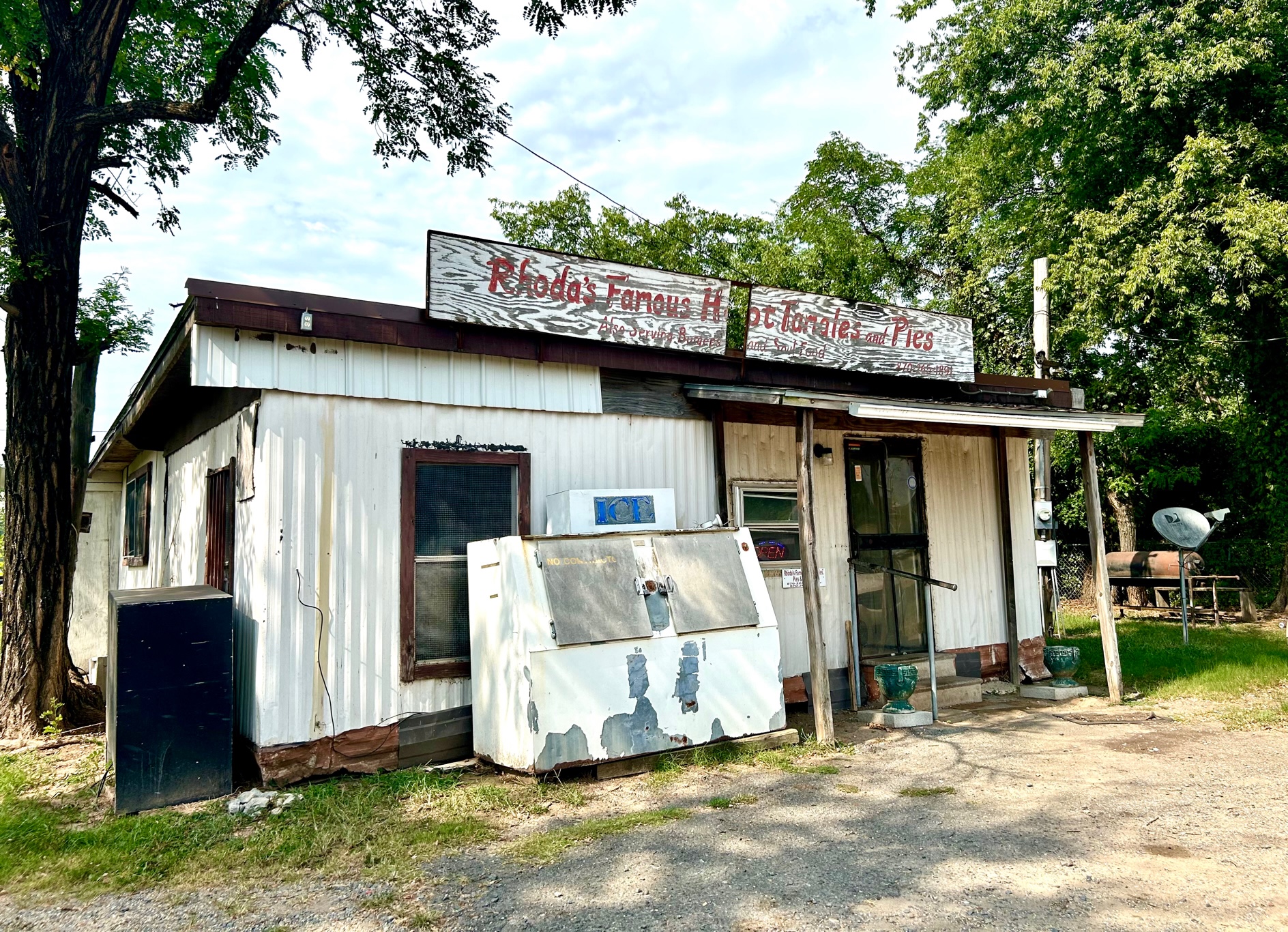
All Around Arkansas: Rhoda's Famous Hot Tamales


                Like a lot of Arkansans, my wife and I headed to the shores of the Florida panhandle a few weeks ago for some fun at the beach. The road to paradise takes us down U.S. Highway 65 through the Arkansas Delta towns of Dumas, McGehee and Lake Village.

                Not only is Lake Village (Chicot County) home to beautiful Lake Chicot and the state park on its shores, but the city is also home to one of the best soul food restaurants in the region — Rhoda’s Famous Hot Tamales and Pies. And nine times out of 10, we stop at Rhoda’s for some of her famous tamales to take on the road.

                Located at 714 St. Mary’s Street in Lake Village, Rhoda’s doesn’t look like much on the outside, but once you step inside and smell the savory flavors coming from the back, you’ll understand why this place is no ordinary eatery.

                About 60 years ago, Rhoda Adams started making and selling pies as a way to raise money for her church. Soon afterward, she began making her family’s secret recipe tamales and selling them out of her car along Highway 65. Her food became an instant hit, and people from the area began seeking out Rhoda and her delicious homemade pies and tamales. 

                Eventually family and friends persuaded Rhoda to open a standalone restaurant to serve her pies, tamales and other soul food fare such as fried catfish, fried chicken, macaroni and cheese, pinto beans and cornbread.

                Ms. Rhoda is usually at the restaurant greeting customers at a table in the front of the dining room. Today, her daughter does most of the cooking, but Ms. Rhoda still does a lot of the directing (and taste testing). Ms. Rhoda’s husband, James, and her son-in-law also help with the family business. 

                Both Ms. Rhoda and her daughter, Dorothy, are sweet ladies who will be glad to tell you all kinds of interesting stories while you wait on your food, which is cooked to order. And not only are they great cooks, but from my few interactions with them, they are great salespeople. It's tough to leave the restaurant without Ms. Rhoda or her daughter persuading you to try more items on their menu. And if you give in, I promise you won’t be disappointed. I’ve had many things on the menu and they have all been awesome. 

                As such, Rhoda’s has been featured in many newspapers, magazines and online blogs. In February 2017, Rhoda’s was inducted into the Division of Arkansas’ Heritage Arkansas Food Hall of Fame. 

                A bit of warning for those who only carry credit or debit cards, Rhoda’s is a cash only business. It's open every day except Sunday. But before you set out on your soul food pilgrimage to Lake Village, check the hours, as they vary from day to day. You can do so by calling the restaurant at (870) 265-3108. You can dine or take-out at Rhoda’s. Just keep in mind that the dining room only has three tables, so chances are, you’ll be getting the food to go. 

                I can honestly say, having traveled all over the Natural State and eating at some of the finest establishments our state has to offer, Rhoda’s Hot and Tamales and Pies is not just an Arkansas treasure, but a national one as well. The tamales are the best I've tasted, and the cheeseburger and pecan pie I had on my last trip was absolutely wonderful!  

                As you may have noticed from reading my column on a regular basis, I find Lake Village and the Arkansas Delta to be a fascinating place. There’s a lot of scenic places, historical sites and stories and authentic restaurants with food you just can’t get at a chain restaurant. Trust me, if you are anywhere in the vicinity of Lake Village, do your tastebuds a favor and check out Ms. Rhoda’s. 

Monday, August 7, 2023

All Around Arkansas: Arkansas' Wine Country


            In last week’s column, I wrote about the song, “Wolverton Mountain” and its antagonist, Clifton Clowers. Due to space limitations, I wasn’t able to share that Clowers was mentioned in the 1988 country hit, “If the South Woulda Won,” by Hank Williams Jr. Williams’ longtime manager was Merle Kilgore, who was the co-writer of Wolverton Mountain and Clowers’ nephew. In Williams’ song, he sings about “going up on Wolverton Mountain and see ole Clifton Clowers and have a sip of his good ole Arkansas wine.”

            Along with Bill Clinton, diamonds and Walmart, Arkansas is famous for its wine, particularly the adult beverage produced in the small Arkansas River Valley town of Altus (Franklin County). Altus takes its name from the Latin word for “high,” as it was the highest point on the Little Rock and Fort Smith Railroad. 

            As the wine capital of Arkansas, Altus is the home of five wineries: Post Winery, Wiederkehr Wine Cellars, Mount Bethel Winery, Chateau Aux Arc and Dionysus Wine & Brew.

            The Altus area was originally settled by native Americans (mostly Cherokee) and later, French explorers and pioneers. European settlers began moving in around 1850. 

            One such settler was Jacob Post, who immigrated to the United States from Germany in 1872 and found work in the coal mines and railroad construction. Unable to successfully grow grapes in his first stop of Illinois, he searched for another location. He learned through the grapevine (pardon the pun) that north central Arkansas had an ideal climate and fertile land for growing grapes. As a result, Post settled in the hills near present-day Altus and planted several vineyards. Soon Post began selling his wine to local railroad workers and other immigrants who enjoyed having wine with their dinner. Post Winery is still in business and owned and operated by the descendants of Jacob Post.

            Swiss immigrant Johannes Wiederkehr moved to the area in 1880 and established Wiederkehr Winery in an underground cellar he built. Today, the cellar is home to the popular Weinkeller Restaurant.

            Founded by Eugene Post in 1956, Mount Bethel Winery in Altus is the third oldest winery in the area. Post decided to start his own winery not long after his brother, Jacob, purchased the Altus Cooperative Winery and started what is now known as the Post Familie Winery. Mount Bethel Winery is best known for its elderberry wine, as Mount Bethel is the only winery in Arkansas to make use of the native, wild berry.

            Another popular winery in Altus is Chateau Aux Arc. This winery takes its name from the French term meaning “at the bend,” which is generally believed to be the origin of the name “Ozark.” Audrey House started the winery in 2001, purchasing about 20 acres from Al Wiederkehr of Wiederkehr Winery.

            And finally, Dionysus Wine & Brew in Altus was founded in 2014 by Dennis and Sharla Wiederkehr of the famous Wiederkehr family. The couple crafts blended wines using their combined 60-plus years of experience in the wine & hospitality industries.

            Today, these wineries and several smaller ones make up the Arkansas Wine Country Trail. Arkansas is the oldest and largest wine-producing state in the southern U.S. All of these wineries offer free public tours and wine tasting opportunities. Of course, wines made on site can be purchased as well.

            Throughout the year, there’s a number of events that can be enjoyed in Altus, such as Trifest, which is made up of the Annual Cowie Wine Fest and Grape Stomp, Arkansas Wine Heritage Day, and the Amateur Wine Competition. These fun events are usually held on the second Saturday in September at Cowie Wine Cellars in nearby Paris (Logan County).

            If you are a wine connoisseur, then a trip to Altus is definitely an Arkansas adventure you must add to your Natural State bucket list.

        A proud sixth-generation Arkansan, Darrell Brown is a lover of all things Arkansas. He lives on beautiful Lake Norrell in Saline County with his wife, Amy, and their beloved Boston Terrier, Dixie. Find him on Instagram at AllAroundArkansas.

Monday, July 31, 2023

All Around Arkansas: Woolverton Mountain


                If you were listening to country radio in the summer of 1962, chances are you heard the song "Wolverton Mountain." Performed by singer/songwriter, Claude King, the tune told the story of a man who longed for a girl who lived atop a place called Wolverton Mountain, fiercely guarded by her overprotective and violent father, Clifton Clowers. 

                That year, the song spent nine weeks at No. 1 on the Billboard country chart. "Wolverton Mountain" was also a huge crossover hit for King, hitting No. 6 on the Billboard top 100 pop chart and No. 3 on its easy listening chart.

                The song was co-written by Merle Kilgore, a major force in the country music industry in the 1960s and through the mid-1990s. Not only did he help pen "Wolverton Mountain," but he also co-wrote "Ring of Fire" with June Carter, whose future husband, Johnny Cash, recorded in 1963. Kilgore helped write many other country tunes over the years and was the longtime business manager of Hank Williams Jr.

                Clifton Clowers was named after Kilgore’s uncle. In the song, Clowers is pictured as an ornery and dangerous man who's "mighty handy with a gun and a knife" and who posed a fatal threat to any man who tried to win the affection of his “pretty young daughter.”

                But most people don’t know that Clowers was a real person who lived on top of Woolverton Mountain in Arkansas. (It's not clear why the mountain’s name is misspelled in the song title and lyrics.)

                Woolverton Mountain stands about 4 miles north of Center Ridge (Conway County) and has an elevation of 1,063 feet. The mountain was named for the Woolverton family, who had settled it in the late 1800s.

                The song’s antagonist, Clifton Clowers, was born on Oct. 30, 1891, in Center Ridge to Thomas and Mary Clowers. In July 1919, Clifton married Esther Bell. After returning from World War I, Clowers became a father, farmer and served faithfully as a longtime deacon at Mountain View Baptist Church. He lived most of his life on a small farm located on the northern edge of Woolverton Mountain. 

                The success of the song made Clowers a minor celebrity, and many tourists came to Woolverton Mountain to get a picture or an autograph. Clowers didn’t particularly like the attention. He often said he wished that Kilgore and King hadn’t suggested in the song that Clowers threatened his daughter's suitors with a gun and knife. "I never used those things for that purpose, I just used them to hunt and whittle,” he said. 

                For his 100th birthday celebration in 1991, Clowers was visited by both his nephew, Merle Kilgore, and Claude King, who performed the iconic tune. Clowers died at age 102 in August 1994, in Clinton (Van Buren County). He was buried at Woolverton Mountain Cemetery, which is located at the base of the mountain.

                I have a personal connection with the song — one of the first I remember hearing as a child. My parents had become friends with a couple, Carroll and LaDon Woolverton, through the world of square dancing in Sherwood (Pulaski County) in the late 1960s. Carroll was a member of the Woolverton family, who were longtime residents of the mountain. When I was born several years later in 1976, the Woolvertons became like second parents to me. The story goes that as a young boy in the early 80s, I actually met Clifton Clowers. Somewhere there’s supposedly photographic evidence to prove it.

                So, the song may say don’t go on Woolverton Mountain and face Clifton Clowers, but apparently I did and lived to write about it.

Wednesday, July 26, 2023

All Around Arkansas: Lake Chicot State Park


                 Lake Chicot State Park sits in Arkansas’ southeastern corner on the state’s largest natural lake, Lake Chicot, a 20-mile-long oxbow created by the Mississippi River hundreds of years ago. The lake, just east of the city of Lake Village (Chicot County), is not only the largest natural lake in the state, but it's also the largest oxbow lake in North America. If you've driven from Arkansas to the Gulf Coast, it's likely you’ve seen Lake Chicot.

                About 300 years ago, the lake was part of the channel of the Mississippi River. Its name comes from the French word “chicot,” which means “full of cypress stumps.” If you’ve ever boated on or walked along the shores of Lake Chicot, you’ve seen the many cypress stumps and trees that line its banks. The C-shaped lake is about 0.75 miles wide and 22 miles long.

                Unfortunately, Lake Chicot was polluted due to flooding in 1916, and starting in 1920, work on a levee along the nearby Mississippi River polluted the lake even more. Dredging for the levee’s construction resulted in deposition of silt and pesticides throughout the 1930s through the 1950s, which caused the lake's water quality to deteriorate.

                But starting in 1948, the Arkansas Game & Fish Commission built an earthen dam to separate the upper fourth of the lake from the runoff that has been entering the lower portion of Lake Chicot from Connerly Bayou. The result of the dam’s construction was better water quality, which revitalized the beauty of the lake. And because of that, the Arkansas Department of Parks & Tourism built the 211-acre Lake Chicot State Park in 1957.

                A new pumping plant was installed at Lake Chicot in 1985 to divert silt from the lake to the Mississippi River. Sport fish populations were restocked by the Arkansas Game & Fish Commission.

                Renovations of many of the park’s amenities were made after Arkansas voters approved a statewide one-eighth-percent sales tax championed by Gov. Mike Huckabee in 1996. Proceeds from the tax were earmarked for conservation and parks programs. Additional funding for improvements of the park came from the Arkansas Natural & Cultural Resources Council.

                Today, the park offers many recreational opportunities to visitors, with 122 campsites, 14 cabins, a swimming pool, a boat launch ramp and a playground. There's a marina that sells snacks, fuel and bait and rents boats, motors and personal watercraft. Programs presented by knowledgeable park interpreters highlight area wildlife and the area’s Civil War history. The park also hosts an annual blues and gospel music heritage festival each June and Gospelfest each September. 

                Because of the favorable climate and ecology, fishing conditions at Lake Chicot are wonderful. Bass, catfish, crappie, bream and other types of fish inhabit the lake. As a result, the lake has become a fisherman’s paradise. 

                If you are a fisherman, Lake Chicot and the state park that sits on its banks is a bucket list destination in the Natural State. For more information about the park and its amenities and programs, go to arkansasstateparks.com/lakechicot or call the park’s visitor center at (870) 265-5480.

Tuesday, July 18, 2023

All Around Arkansas: Calico Rock, Arkansas


                The city of Calico Rock (Izard County) is located in north central Arkansas on the White River. It takes its unusual name from the streaks of colors on the bluffs that overlook the river, which reminded early settlers of the colors in calico cloth. In writing about his travels through the Missouri and Arkansas territories in 1818 and 1819, author and explorer Henry Schoolcraft referred to the area as “the calico rock.” It is the only city in the United States with that name.

                The town started as a steamboat landing on the White River in the early 1800s, and was originally known as Calico Landing. The landing, located at the river’s confluence with Calico Creek, was the most popular landing site above Batesville (Independence County), which was as far upstream that steamboats were able to travel. 

                In 1857, the first of several general stores opened in the area. But they closed when the Civil War began. After the war ended and Reconstruction began, carpetbaggers from the North began moving into the area and opened several businesses, including a mercantile, a dry goods store, a drug store and doctor’s office. These businesses were built on the north shore facing the White River, with the front street following the river east and west. 

                A post office opened in 1871, but only lasted for a year. Another was established in May 1879. Due to the town’s rough and tumble atmosphere, organized religion was slow to make its way into Calico Rock, but eventually Methodist and Presbyterian congregations formed and built a house of worship, which was used by both congregation until 1907, when the Presbyterians built their own church.

                In 1898, a fire destroyed nearly all the businesses in Calico Rock’s commercial district. But the city would rebound and became a bustling community in 1902, when construction began on railroad tracks along the river beneath the colorful bluffs. Calico Rock served as the headquarters for railroad construction crews, and later that year, the St. Louis and Iron Mountain Railroad officially opened service in the town. 

                In 1903, a hardware store opened, as did the Bank of Calico Rock. As of today, these two structures are still in use. That same year, Calico Rock’s first permanent schoolhouse was built. The building was a two-story concrete block structure that housed the elementary and high schools and served the community for nearly 50 years. Calico Rock was officially incorporated as a city on Jan. 24, 1905.

                On April 7, 1923, a spark from a locomotive on the switch track set fire to a warehouse. High winds caused the flame to spread to the city’s Main Street. More than 20 businesses were destroyed, including all of the commercial businesses on the east side and some on the west side. The brick and stone replacement structures that remain have become known as the “ghost town” of Calico Rock — officially known as the Calico Rock Historic District.

                The city got a taste of Hollywood in 1974, when writer/director Charles B. Pierce filmed the movie “Bootleggers” there. Pierce is best known for his 1972 cult classic, “The Legend of Boggy Creek,” about the alleged Sasquatch monster that roams the swamps near Fouke (Miller County). The poster for the film credited a “rising star” named Jaclyn Smith, who would become part of the hit television show, “Charlie’s Angels,” as well as a successful model and clothing designer.

                Today, Calico Rock is a city with around 900 residents. In recent years, it has become very attractive to retirees and tourists, thanks in part to its natural scenic beauty and proximity to such tourist destinations as Blanchard Springs Caverns and the Buffalo National River. No doubt, it’s places like Calico Rock that help give our state the nickname “The Natural State.”

Saturday, July 15, 2023

All Around Arkansas: Jacksonville Museum of Military History


            The city of Jacksonville holds a special place in my heart. It’s the city where I graduated high school (North Pulaski High), taught high school (Jacksonville High) and where my parents have lived for the past 30 years. I have a lot of fond memories of going up and down Jacksonville’s Main Street, eating at the Wendy’s after football games and perusing the aisles of now-defunct stores such as Blockbuster and Hastings. 

            I also remember driving past the large white building in downtown Jacksonville that at the time operated as a funeral home and is now home to the Jacksonville Museum of Military History. 

            Before it was a museum and funeral home, it was the original administration building of the World War II–era Arkansas Ordnance Plant. The museum showcases significant war and home-front activities in central Arkansas from the Civil War era through the Cold War.

            The museum opened in May 2005 and was funded by private donations, state and federal grants and the Jacksonville Advertising & Promotions Commission. Its original mission was to preserve the history of the important contributions made by local ordnance plant workers during World War II. As planning progressed, museum staff and supporters decided that the scope of the museum should grow to include more about the military history of Jacksonville and the surrounding area. 

            The museum is full of exhibits and artifacts that tell the history of Jacksonville’s military heritage. Its Civil War exhibit interprets what is known as the Little Rock Campaign and focuses on the Battle of Reed’s Bridge (a.k.a. the Battle of the Bayou Meto), which took place on the Bayou Meto River just outside present-day Jacksonville. 

            The World War II portion of the museum features an exhibit dedicated to the Arkansas Ordnance Plant, which opened in 1941 in Jacksonville. The plant was part of President Franklin D. Roosevelt’s Lend-Lease program. Before the end of the war, the plant increased Jacksonville’s population of 400 to more than 40,000. It provided much-needed employment during the post-Depression era and produced nearly 90% of all the detonators and fuses used by the Allied Forces during World War II. An original guard house from the Arkansas Ordnance Plant has been restored and now stands in front of the museum. 

            The museum houses one of the largest collections of World War II-era patriotic and propaganda posters in the country, as well as a Titan II missile launch console and a T-37 cockpit trainer. The museum also features exhibits that tell the histories of the Little Rock Air Force Base and the Arkansas Air National Guard.

            Also located on the museum’s grounds is a monument dedicated to the workers who died in the Titan II Missile Accident, which took place near Searcy on Aug. 9, 1965. Fifty-three workers were killed — the largest loss of life ever suffered in a U.S. nuclear weapons facility — including my uncle, James C. Harvey. The monument was originally placed at the entrance of the nearby Little Rock Air Force Base, but was moved to the museum grounds several years ago.

            Whether you are a military history buff, interested in Arkansas history, or simply looking to expand your knowledge of the history of America’s armed forces, the Jacksonville Museum of Military History is a wonderful place to visit in central Arkansas.

            The museum is open from 9 a.m. to 5 p.m. Monday through Friday and from 10 a.m. to 5 p.m. Saturday. Admission is $3 for adults, $2 for seniors and veterans and $1 for students. Special arrangements can be made for groups of 10 or more. For more information, visit the museum’s website at www.jaxmilitarymuseum.org.


Tuesday, July 4, 2023

All Around Arkansas: The Plum Bayou Mounds


                Native Americans have played an important role in the history of our state. Not only were they the first dwellers of what would become Arkansas, but their history and culture still have an impact. 

                Many of our towns, communities and bodies of water have Native American names. The name Arkansas comes from the Algonquin Indian's name for the Quapaw Indians who once lived in what is now Arkansas. The Quapaw were known as the Arkansea, which meant “downstream people” or “southwind people.” 

                Three major tribes inhabited early Arkansas: the Quapaw (who lived in central and eastern Arkansas), the Osage (who lived in the northwest portion of our state) and the Caddo (who lived in southwestern region of Arkansas). As a result, Indian mounds are found all over the Natural State. But there are none more famous that the Plum Bayou Mounds (formerly known as the Toltec Mounds) outside of Scott (Lonoke County).

                It is believed the Plum Bayou Mounds were built by Native Americans who had a distinct culture from the other natives who inhabited the lower Mississippi Valley. The sites built by these people have been found throughout the White River and Arkansas River floodplains of central and eastern Arkansas and can also found as far west as the eastern Ozark Mountain range.

                The Plum Bayou Mounds settlement had a small population consisting primarily of political and religious leaders of the community and their families. The center was occupied from the 7th to the 11th century.

                The mounds were built on the banks of an oxbow lake. On the other side of the mounds was a lake, which is now known as Mound Pond. Most archaeologists and historians believe that 18 mounds were built in this area. 

                The Plum Bayou Mounds were built along the edges of two open plazas and used for political, religious and social events attended by people from the vicinity. At least two mounds were used for feasting, as indicated by the finding of discarded food remains. Most of the mounds were flat-topped platform mounds with buildings on them. Evidence has shown that other Native Americans lived on the Plum Bayou site as late as the 15th century, but they did not build any mounds.

                The Plum Bayou Mounds were once known as the Toltec Mounds, as it was once believed that the Toltec Indians of Mexico made their way to the area and built the mounds. The Knapp Family owned the land where the mounds stood from 1849 to 1905. 

                The mound site was relatively unprotected between 1849-1975. The land was privately owned and used mainly as farmland. The mounds were placed on the National Register of Historic Places in 1973, and the state of Arkansas began trying to acquire the property. Eventually, the Arkansas Department of Parks & Tourism purchased the property with state and federal money in 1975. The site was made a National Historic Landmark in 1978. What was known then as Toltec Mounds Archeological State Park opened in 1980. 

                The name Plum Bayou is actually borrowed from a nearby waterway and was eventually applied to the distinctive culture of the site. After extensive discussions between the Department of Parks & Tourism, the Arkansas Archaeological Society and the Quapaw Nation, the park was officially renamed Plum Bayou Archaeological State Park in November 2022.

                The park’s visitor center consists of exhibits that interpret the history of the Plum Bayou people and mounds, as well as an extensive collection of ancient artifacts found on the site. Guided and self-guided tours of the mounds are available. The park also hosts numerous special events throughout the year. For more information, contact the park’s office at (501) 961-9442.

                If Arkansas history, particularly its Native American heritage, interests you, then Plum Bayou Archaeological State Park is a fascinating place to visit. And as I wrote in last week’s column, while you’re in the Scott area, there are a lot of other interesting places to see and visit that are worth the drive to the small community outside North Little Rock.