Monday, August 28, 2023

All Around Arkansas: Albert Pike Memorial Temple


                As many of my longtime readers know, I like to write about things I have personal story or connection with, and today’s column is one of those examples. 

                In 2014, after earning the third degree in Freemasonry, I followed my father, grandfather, great grandfather and several uncles by obtaining the 32nd degree in the Scottish Rite of Freemasonry. It was a very special couple of days to be able to participate in the same rituals and ceremonies that three generations of Brown men had done years before.

                All of this took place in a large historical limestone building at 700–724 Scott Street in Little Rock, the Albert Pike Memorial Temple. The temple is named for Albert Pike, a prominent figure in the history of Arkansas who played a major role in the establishment of Freemasonry in Arkansas and the U.S. In fact, Pike, a former Confederate general, attorney and teacher, is the only Confederate with a statue erected in his honor in our nation’s capital. 

                As a Freemason, I can tell you that every masonic lodge I’ve visited in Arkansas has paintings of two men prominently displayed — President George Washington (“The Father of American Freemasonry”) and Albert Pike. So yes, in Masonry, Albert Pike’s a big deal.

                Freemasonry was first brought into what is now Arkansas in the early 1800s. Many members of the fraternity have served as important figures in the state’s history by becoming governors, representatives, judges, Supreme Court justices and prominent businessmen. 

                The Scottish Rite of Freemasonry was introduced in Arkansas by Boston native Albert Pike, who settled in Arkansas in the 1830s. Pike became a Freemason in 1850, and in 1858, he was elected to the Supreme Council for the Southern Jurisdiction of Scottish Rite Freemasonry in the United States. In 1859, Pike became the Grand Commander of the Supreme Council. 

                Pike is probably most notable for his book, “Morals and Dogmas of the Ancient and Accepted Scottish Rite of Freemasonry.” The book — lengthy and complex — is considered a reference for the fraternity. After I became a 32nd degree Scottish Rite Freemason, I was given a beautifully bound copy of "Morals and Dogma," along with the “Cliff’s Notes” version to help understand Pike’s writings. The substance of masonic degrees 4-32 comes from Pike’s book.

                The Albert Pike Memorial Temple is not only the headquarters of the Scottish Rite in Arkansas, but it's also home to the offices of the governing body of Freemasonry in Arkansas and the Grand Lodge of Arkansas. The current structure was built to replace the original masonic temple in the state capitol at 5th and Main streets. That building was destroyed by fire in 1919. 

                In its current form, the Albert Pike Memorial Temple was completed in 1924 and dedicated in May of that year. Unfortunately, on May 7, 1952, another fire destroyed part of the building. The rebuilt temple was completed in September 1956.

                The building covers an entire block from 7th to 8th streets. Two sculptures featuring double-headed eagles — the most recognized symbol of the Scottish Rite — stand in front of the temple’s entrance on Scott Street. 

                Inside the building, on the first floor, are dining rooms, an industrial size kitchen and staff offices. On the second floor are the auditorium and library. The exterior of the building features Bedford limestone. In the northeastern corner is a cornerstone made from a block of Batesville marble. On it is chiseled the date of the laying of the cornerstone and the names of the members of the 1924 board of trustees.

                For those interested, the Albert Pike Memorial Temple is open to the public during the week. The building’s auditorium and other facilities are now available to non-Masons and non-Masonic organizations for events. For more information, contact (501) 375-5587.

                And as someone who has been all over this building, I can promise you there are no hidden treasure maps or a book of secrets — at least that I can tell you about.

Tuesday, August 22, 2023

All Around Arkansas: The Jacob Wolf House


                Built in 1829, the Jacob Wolf House in Norfork (Baxter County) is believed to be the oldest standing public structure in Arkansas and the last remaining two-story dog-trot public structure in the United States.

                The two-story log building stands on a hillside overlooking the juncture of the White and North Fork rivers. It was built by Jacob Wolf as the first permanent courthouse of Izard County in the Territory of Arkansas. 

                Wolf, a native of Germany, had made his way to the area in 1820, and eventually established a permanent home at the mouth of the North Fork River around 1824. In 1825, the territorial government granted him a license to operate ferries across both the White and North Fork rivers. Not only was Wolf a ferry operator, but he was also a carpenter, blacksmith and Baptist preacher.

                Named for Arkansas’ second territorial governor, Izard County was formed in 1825, and in 1826, Wolf was elected as a representative to the Arkansas Territorial Legislature. In October 1829, he shepherded legislation that located Izard County’s permanent county courthouse in Liberty, a small town that had built up around Wolf’s family homestead and ferries. Wolf agreed to donate land to the county for the courthouse and then, like all good politicians do, landed the lucrative contract for building the structure.

                Wolf built a two-story log house with a central breezeway on the first level (commonly known as a dogtrot) to serve as the courthouse. The large upper-level room that extends over the breezeway served as the courtroom. Judges and attorneys traveled from all over the Arkansas Territory to attend county and territorial court sessions. 

                The lower level of the building was home to the Izard County clerk’s office. The county clerk at the time was John P. Houston, an older brother of the famed Texas general and politician Sam Houston. 

                Families from throughout Izard County would camp on the courthouse grounds when court was in session. According to historical accounts, it was common to see dancing, hear live music, see pigs being roasted and watch people competing in games — things you don’t see at Arkansas courthouses these days!

                While traveling on the White River in 1830, noted Arkansas author and politician C.F.M. Noland wrote, in an article published in the Arkansas Advocate, that “where the North Fork River joins the White River stands the Seat of Justice, Liberty; its situation is elevated and commanding….” Noland wrote that the town had a tavern, inn, general store and blacksmith shop (presumably operated by Wolf). A post office was established at Liberty in 1826.

                Several counties were formed out of Izard County by 1835. As such, Liberty was no longer a prime location for a county seat, which had been moved to the town of Athens. Wolf, still a member of the Arkansas General Assembly, passed legislation to have the land he had donated to the government returned to him. The structure Wolf had originally built as a county and territorial courthouse became the home of his large family of sixteen children and five stepchildren. Wolf died in January 1863, and the house and property were sold in 1865.

                In 1937, the Jacob Wolf House came under public ownership and was taken care of by local residents. In the 1960s, the Gerald and Elna M. Smith Foundation restored the building. A dedication ceremony took place on May 8, 1966, which featured a speech by Congressman Claude Fuller. The house was listed on the National Register of Historic Places on April 13, 1973.

                In 1999, the Jacob Wolf House received a courthouse restoration grant from the Division of Arkansas Heritage’s Arkansas Historic Preservation Program. The grant provided money to restore the structure to when it served as a territorial courthouse. Restoration was completed in 2002. 

                On Oct. 4, 2016, the Baxter County Quorum Court voted to transfer ownership of the property to the Division of Arkansas Heritage, which now operates it as the Jacob Wolf House State Historic Site to ensure that future generations of Arkansans can appreciate this historic building.

Saturday, August 12, 2023

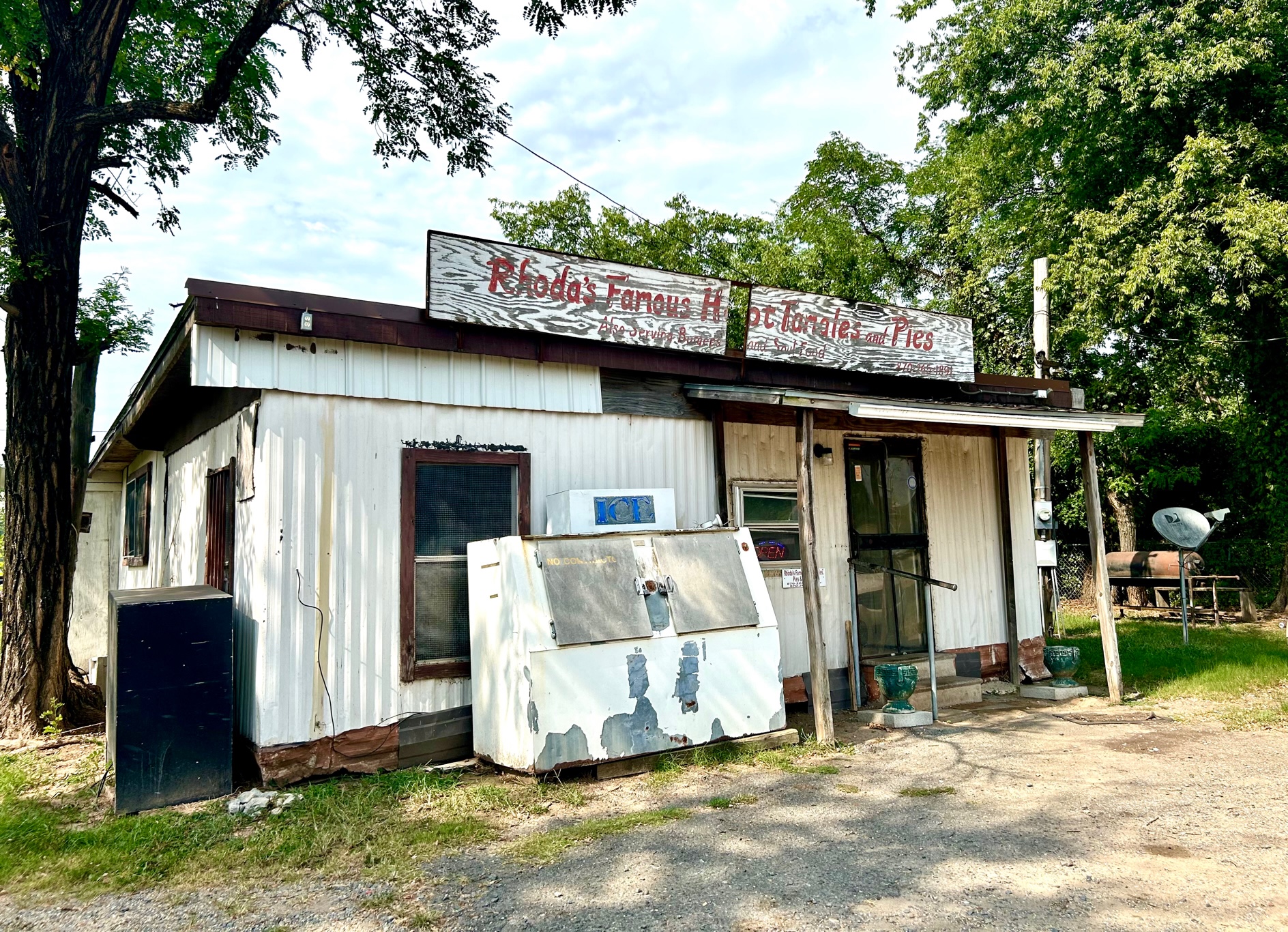
All Around Arkansas: Rhoda's Famous Hot Tamales


                Like a lot of Arkansans, my wife and I headed to the shores of the Florida panhandle a few weeks ago for some fun at the beach. The road to paradise takes us down U.S. Highway 65 through the Arkansas Delta towns of Dumas, McGehee and Lake Village.

                Not only is Lake Village (Chicot County) home to beautiful Lake Chicot and the state park on its shores, but the city is also home to one of the best soul food restaurants in the region — Rhoda’s Famous Hot Tamales and Pies. And nine times out of 10, we stop at Rhoda’s for some of her famous tamales to take on the road.

                Located at 714 St. Mary’s Street in Lake Village, Rhoda’s doesn’t look like much on the outside, but once you step inside and smell the savory flavors coming from the back, you’ll understand why this place is no ordinary eatery.

                About 60 years ago, Rhoda Adams started making and selling pies as a way to raise money for her church. Soon afterward, she began making her family’s secret recipe tamales and selling them out of her car along Highway 65. Her food became an instant hit, and people from the area began seeking out Rhoda and her delicious homemade pies and tamales. 

                Eventually family and friends persuaded Rhoda to open a standalone restaurant to serve her pies, tamales and other soul food fare such as fried catfish, fried chicken, macaroni and cheese, pinto beans and cornbread.

                Ms. Rhoda is usually at the restaurant greeting customers at a table in the front of the dining room. Today, her daughter does most of the cooking, but Ms. Rhoda still does a lot of the directing (and taste testing). Ms. Rhoda’s husband, James, and her son-in-law also help with the family business. 

                Both Ms. Rhoda and her daughter, Dorothy, are sweet ladies who will be glad to tell you all kinds of interesting stories while you wait on your food, which is cooked to order. And not only are they great cooks, but from my few interactions with them, they are great salespeople. It's tough to leave the restaurant without Ms. Rhoda or her daughter persuading you to try more items on their menu. And if you give in, I promise you won’t be disappointed. I’ve had many things on the menu and they have all been awesome. 

                As such, Rhoda’s has been featured in many newspapers, magazines and online blogs. In February 2017, Rhoda’s was inducted into the Division of Arkansas’ Heritage Arkansas Food Hall of Fame. 

                A bit of warning for those who only carry credit or debit cards, Rhoda’s is a cash only business. It's open every day except Sunday. But before you set out on your soul food pilgrimage to Lake Village, check the hours, as they vary from day to day. You can do so by calling the restaurant at (870) 265-3108. You can dine or take-out at Rhoda’s. Just keep in mind that the dining room only has three tables, so chances are, you’ll be getting the food to go. 

                I can honestly say, having traveled all over the Natural State and eating at some of the finest establishments our state has to offer, Rhoda’s Hot and Tamales and Pies is not just an Arkansas treasure, but a national one as well. The tamales are the best I've tasted, and the cheeseburger and pecan pie I had on my last trip was absolutely wonderful!  

                As you may have noticed from reading my column on a regular basis, I find Lake Village and the Arkansas Delta to be a fascinating place. There’s a lot of scenic places, historical sites and stories and authentic restaurants with food you just can’t get at a chain restaurant. Trust me, if you are anywhere in the vicinity of Lake Village, do your tastebuds a favor and check out Ms. Rhoda’s. 

Monday, August 7, 2023

All Around Arkansas: Arkansas' Wine Country


            In last week’s column, I wrote about the song, “Wolverton Mountain” and its antagonist, Clifton Clowers. Due to space limitations, I wasn’t able to share that Clowers was mentioned in the 1988 country hit, “If the South Woulda Won,” by Hank Williams Jr. Williams’ longtime manager was Merle Kilgore, who was the co-writer of Wolverton Mountain and Clowers’ nephew. In Williams’ song, he sings about “going up on Wolverton Mountain and see ole Clifton Clowers and have a sip of his good ole Arkansas wine.”

            Along with Bill Clinton, diamonds and Walmart, Arkansas is famous for its wine, particularly the adult beverage produced in the small Arkansas River Valley town of Altus (Franklin County). Altus takes its name from the Latin word for “high,” as it was the highest point on the Little Rock and Fort Smith Railroad. 

            As the wine capital of Arkansas, Altus is the home of five wineries: Post Winery, Wiederkehr Wine Cellars, Mount Bethel Winery, Chateau Aux Arc and Dionysus Wine & Brew.

            The Altus area was originally settled by native Americans (mostly Cherokee) and later, French explorers and pioneers. European settlers began moving in around 1850. 

            One such settler was Jacob Post, who immigrated to the United States from Germany in 1872 and found work in the coal mines and railroad construction. Unable to successfully grow grapes in his first stop of Illinois, he searched for another location. He learned through the grapevine (pardon the pun) that north central Arkansas had an ideal climate and fertile land for growing grapes. As a result, Post settled in the hills near present-day Altus and planted several vineyards. Soon Post began selling his wine to local railroad workers and other immigrants who enjoyed having wine with their dinner. Post Winery is still in business and owned and operated by the descendants of Jacob Post.

            Swiss immigrant Johannes Wiederkehr moved to the area in 1880 and established Wiederkehr Winery in an underground cellar he built. Today, the cellar is home to the popular Weinkeller Restaurant.

            Founded by Eugene Post in 1956, Mount Bethel Winery in Altus is the third oldest winery in the area. Post decided to start his own winery not long after his brother, Jacob, purchased the Altus Cooperative Winery and started what is now known as the Post Familie Winery. Mount Bethel Winery is best known for its elderberry wine, as Mount Bethel is the only winery in Arkansas to make use of the native, wild berry.

            Another popular winery in Altus is Chateau Aux Arc. This winery takes its name from the French term meaning “at the bend,” which is generally believed to be the origin of the name “Ozark.” Audrey House started the winery in 2001, purchasing about 20 acres from Al Wiederkehr of Wiederkehr Winery.

            And finally, Dionysus Wine & Brew in Altus was founded in 2014 by Dennis and Sharla Wiederkehr of the famous Wiederkehr family. The couple crafts blended wines using their combined 60-plus years of experience in the wine & hospitality industries.

            Today, these wineries and several smaller ones make up the Arkansas Wine Country Trail. Arkansas is the oldest and largest wine-producing state in the southern U.S. All of these wineries offer free public tours and wine tasting opportunities. Of course, wines made on site can be purchased as well.

            Throughout the year, there’s a number of events that can be enjoyed in Altus, such as Trifest, which is made up of the Annual Cowie Wine Fest and Grape Stomp, Arkansas Wine Heritage Day, and the Amateur Wine Competition. These fun events are usually held on the second Saturday in September at Cowie Wine Cellars in nearby Paris (Logan County).

            If you are a wine connoisseur, then a trip to Altus is definitely an Arkansas adventure you must add to your Natural State bucket list.

        A proud sixth-generation Arkansan, Darrell Brown is a lover of all things Arkansas. He lives on beautiful Lake Norrell in Saline County with his wife, Amy, and their beloved Boston Terrier, Dixie. Find him on Instagram at AllAroundArkansas.